
Current Issues:
Understanding Rafah

Where is Rafah and why is it important?
Rafah is a city located at the south-eastern end of the Gaza Strip. Because it straddles the border between the Strip and Egypt, it is a sensitive site that has likely been used to smuggle arms and other resources to Hamas. Israel believes that the remaining Hamas battalions based there, are holding hostages, and are protecting key figures in the Hamas leadership.
Why did the IDF delay entering Rafah for more than seven months?
The initial IDF focus was on the north and centre of the Gaza Strip because those districts were closest to the communities that were attacked on 7th October.
In the early months of the war, Israel encouraged Gazans to move away from the north and centre of the Strip to avoid the fighting. Most moved south en-masse to the Khan Younis and Rafah areas.
There was huge international pressure (including from the US, UK, European Union, United Nations, International Court of Justice, International Criminal Court) on Israel to desist from entering Rafah due to the risk of a high civilian casualty rate.
Israel was sensitive to the need to avoid antagonising Egypt (with whom she has a peace treaty) that controls the Rafah crossing and is involved in hostage negotiations (whether helpfully or not).
What did the IDF find in Rafah?
The IDF revealed a large number of tunnels (including some connecting to Egypt) along or near the Philadelphi Corridor between Gaza and Egypt. They also found signs of the recent presence of hostages along with bodies of dead hostages.
Numerous Hamas installations, weapons stores and rocket launch pads were identified and destroyed.
There was fierce combat between the IDF and Hamas fighters, some of which caused significant civilian and IDF casualties.
What has been the international response?
US President Biden initially demanded that the IDF desist from entering Rafah and set an ambiguous ‘red line' that Israel rejected.
Israel was told by US and others that evacuation of large numbers of Gazan civilians from Rafah was ‘impossible’ and ‘they have nowhere to go’ yet the IDF succeeded in evacuating around one million civilians away from the anticipated combat zones.
Israel was subjected to unprecedented criticism from the UN, EU and many countries around the world as well as controversial legal pronouncements from the ICJ and the ICC.
Around 45 civilian deaths attributed to an ‘IDF strike on tents’ on 26 May were most likely caused not by an Israeli missile but by secondary explosions from a Hamas ammunition or fuel store placed dangerously close to Gazan civilians.
What next?
Rightly or wrongly, the Rafah operation has intensified global pressure on Israel to agree to a ceasefire even on terms that would leave Hamas able to regroup and re-arm. The key diplomatic issues will be a potential deal to release the hostages and increase humanitarian supplies to the strip in conjunction with the elimination of Hamas’s capability to launch future attacks at Israel.
On 31st May, President Biden announced a framework deal approved by Israel to gradually wind down the war in Gaza, including the piecemeal release of Israeli hostages and Palestinian prisoners and a gradual ceasefire. Hamas has, to date, not accepted this offer despite some positive rhetoric.
Tensions with Egypt remain high over the Rafah crossing and control of the strategically vital Philadelphi Corridor but both sides appear keen to resolve these quickly.
Among the factors contributing to potential developments in the next few months are: intensified international pressure on Israel; escalating Hezbollah attacks emanating from Lebanon; violence in the West Bank; and growing domestic Israeli political turmoil.
Previous Issues:
US Student Protests
Key Points
- Since mid-April 2024 pro- Palestinian student protests across US campuses have taken on an urgent and disruptive form, leading the police to arrest more than 1300 protesters.
- The protesters chant blatant anti-Israel and often antisemitic slogans, and demand divestment from Israel and cooperative institutions due to the war in Gaza, leaving Jewish and Israeli students feeling unsafe.
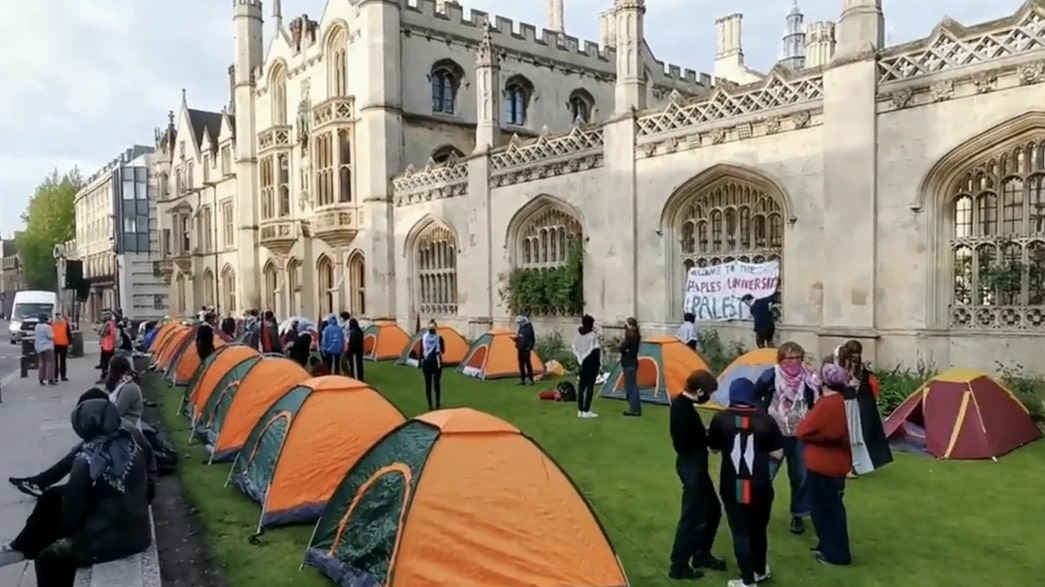
- In the UK and Ireland protests at university campuses have also become stronger in recent weeks with encampments at the universities Oxford, Cambridge, UCL, Edinburgh and more.
Pro-Palestinian Student Protests across the U.S.
In the two weeks between mid-April and early May 2024, more than 1300 student demonstrators across US campuses have been arrested, most notably at Columbia University, City University of New York, UCLA but also elsewhere like the University of Wisconsin, Madison, and University of Arizona, Tuscon and more. The demonstrators were taking part in a week’s-long pro-Palestinian protest movement since October 7th, which has intensified in recent weeks. The protests have led to tensions with university leadership and to clashes with the police.
Protesters, often organised and allegedly partly funded by nation-wide groups like the National Students for Justice in Palestine (NSJP), have set up encampment zones at various campuses and intermittently taken hold of university buildings, causing chaos, disruption, damage to property, making campus feel unsafe in particular for Jewish and Israeli students.
Who is Protesting?
University student groups and organised student coalitions such NSJP and Columbia University Apartheid Divest (CUAD). Some university faculty and staff have also supported and joined the student protests. Non-student groups like American Muslims for Palestine (AMP) or the non-profit New York Civil Liberties Union have also been supporting the current protest movement. Authorities in the US are looking into allegations that non-student bodies have been actively recruiting, organising and funding the protest on campuses.
What are the Calls and Demands of the Demonstrators?
- Clear Pro-Palestinian and anti-Israel positions, which have been expressed both as concern for the humanitarian situation in Gaza and as solidarity with Hamas terrorist attacks, including the celebration of the atrocities it committed on 7th October.
- Calls to ‘free Palestine’, i.e. the delegitimisation of Israel’s existence even with the 1967 borders.
- Targeting of Jewish, Israeli and pro-Israel students and staff, at times preventing their access to areas on campus, as well as verbally abusing and threatening them with antisemitic and anti-Zionist slogans.
- Resonating with the decades-long BDS movement, the current protesters demand that US universities divest from Israel and any companies associated with it. For example, demands that Columbia University divest from companies doing business with Israel (Amazon, Google and Microsoft), as well as corporations in the defence, arms, information security and aerospace industries, who have allegedly been profiting from the war. These include Lockheed Martin and Raytheon, which manufactures Iron Dome, the Israeli missile defence system.
- Protests against the Biden administration and its support for Israel. Some protesters have been using the slogan “genocide Joe” in calls for him to leave office.
- In some cases (e.g. Yale University’s Endowment Justice Coalition), decades-long calls for fossil fuel divestment now overlap with calls to stop supporting Israel’s war in Gaza due to its supposed environmental impact.
How have University Administrations and the Police Reacted?
University administrators, such as Professor Nemat Minouche Shafik, president of Columbia University, have moved from negotiations with protesters to dismantling their encampments, as well as partial suspension and expulsion of students from campus and courses. Unsuccessful negotiations and ensuing chaos and vandalism on campus have led to administrators authorising police forces to enter the campuses, leading to clashes and over 1300 arrests.
This comes just four months after the controversy over the comments of three elite US university presidents made at a congressional hearing on antisemitism in December 2023, which led to the resignation of two of them.
What is the current situation at UK campuses and in Ireland?
In the days since late April 2024, protest encampments have been set up at the universities of Manchester, Sheffield, Bristol and Newcastle, among others. Jewish students have complained that the encampments create a toxic and hostile atmosphere for them on campus, while PM Rishi Sunak has pledged police clamp down should the protests create disorder. Since mid-April 2024 pro-Palestinian student protests across US campuses have taken on and urgent and disruptive form, leading the police to arrest more than 1300 protestants.
The chair of Trinity College Dublin’s Jewish Society, reports in the JC how Trinity College Dublin Student Union (TCDSU) fails to represent its Jewish students or to engage with opposition voices that oppose their year-long support for BDS or with the current announcement that they are planning “something massive” inspired by US student campuses.
Reaction among Jewish Students and Civilian Bodies:
Recent reactions include:
- A petition by Hillel International to assist Jewish students and keep them safe.
- Jewish students using social media to report on their experiences, such as interviews given on the podcast Unholy: Two Jews on the News (from minute 15 onwards).
- The establishment of the “Intra-Communal Professorial Group” (ICPG) in the UK, in order to research, record and analyse the experiences of Jewish students, academics, and other staff on British university campuses, following the recorded increase in antisemitism since 7 October 2023. The ICPG will also make recommendations to UK universities and stakeholders about how to improve the experience of Jewish students and staff.
- “Anti-Jewish Racism Promoted On Campuses”, StandWIthUs UK statement.
- “Major US law firm sues Students for Justice in Palestine for alleged support of Hamas 'terrorist activities’”, Fox News.
Previous Issues:
War in Israel: Understanding the Internal Impact on Israel
Key Points
- Hundreds of thousands of Israeli civilians have been evacuated from their homes near the Gaza and Lebanon borders and live in interim housing arrangements funded by the state.
- The economy has shrunk by 20 percent in annualised terms and the country’s credit rating has been downgraded.
- Civil society has responded in different ways ranging from organising assistance to communities and sectors immediately affected, to supporting hostage families or protesting against the government.
The Political Level: The War Cabinet
On October 11th, a national emergency government was created when the National Unity Party, headed by Benny Gantz, joined the existing coalition. Gantz demanded that a narrower war cabinet be established. It comprises three members: PM Netanyahu (Chair), Defense Minister Gallant and Minister without portfolio Gantz, as well as three observers. The war cabinet is intended to formulate the strategic goals of the war, instruct the military accordingly, review the ongoing operation and point to complementary efforts that the political level should carry out in order to bring about a successful operation. The war cabinet is regularly criticised by opposition leader Yair Lapid or ministers in the security cabinet who feel they have been made redundant, as well as by others inside and outside the coalition.
The Civilian Population: Mass Evacuation of Israelis from their Homes
For humanitarian and safety reasons, hundreds of thousands of Israeli civilians were evacuated from southern and northern parts of the country (near the Gaza and Lebanon borders respectively). By the end of October, about 330,000 Israeli civilians had been evacuated from their homes and moved to interim state-sponsored housing and hotels in other parts of the country. These civilians left behind their homes, educational facilities, employment and community infrastructures. In late January 2024, about 105,000 Israeli evacuees were still living in hotels, flats or other locations. Another 10,000 Israeli civilians chose to rent accommodation at their own expense in the vicinity of their home communities.
The Economy
According to the Central Bureau of Statistics, Israel’s economy shrank nearly 20 percent in annualised terms during the final quarter of 2023 as a result of the cost of the war against Hamas. The GDP dropped sharply, partly due to the months-long mobilization of 300,000 Israeli reservists, who form part of the workforce and run businesses.
The government’s sponsorship of housing for Israeli evacuees also strained the economy, while the new restrictions on the entry of Palestinian workers from the West Bank hit the construction sector.
The US rating agency, Moody’s, downgraded Israel’s credit rating in February 2024 because of the impact of the war. In reaching its decision, Moody’s assessed the political risks and the weakened executive and legislative institutions as well as the country’s fiscal strength. Based on the potential of military escalation with Hezbollah, Moody’s also lowered its outlook for Israel’s debt as “negative”.
The current Israel-Hamas war has been defined as the most expensive war in the country’s history: by early January 2024, it had cost about 217 billion shekels (ca. 47 billion pounds), which includes military operations, financial assistance to the economy (compensation to businesses, paying for property damage, support of evacuees etc).
Civil Society: Hands-on Engagement and Protest
The events of October 7th and its aftermath led to a plethora of civil society initiatives from across the religious and political spectrum and the establishment of war rooms throughout the country. Old and new organisations immediately took action to assist victims’ families and evacuees with material, practical and therapeutic services. In parallel, donations to NGOs and new initiatives in Israel rose greatly. Some donation platforms such as JGive reported that they had channeled towards NGOs in Israel in five weeks after October 7th nearly as much as during the whole year 2022.
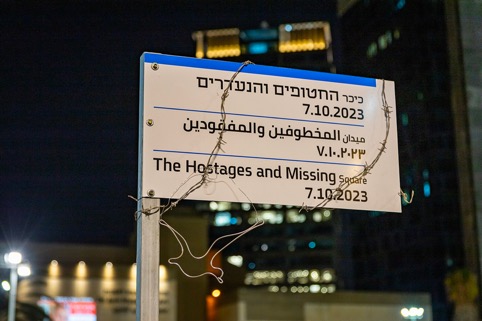
Civil society groups felt they needed to compensate for the failure of state institutions to respond adequately to the situation on the home front. This also led to the renewal of the protest movement against the government which, prior to October 7th, had mobilised against the planned judicial reforms. Protests have also been organised by other core groups affected by the war such as the Hostages and Missing Families Forum, which offers families professional advice, holistic medical and emotional support.
Previous Issues:
Antisemitism since 7th October 2023
Key Points
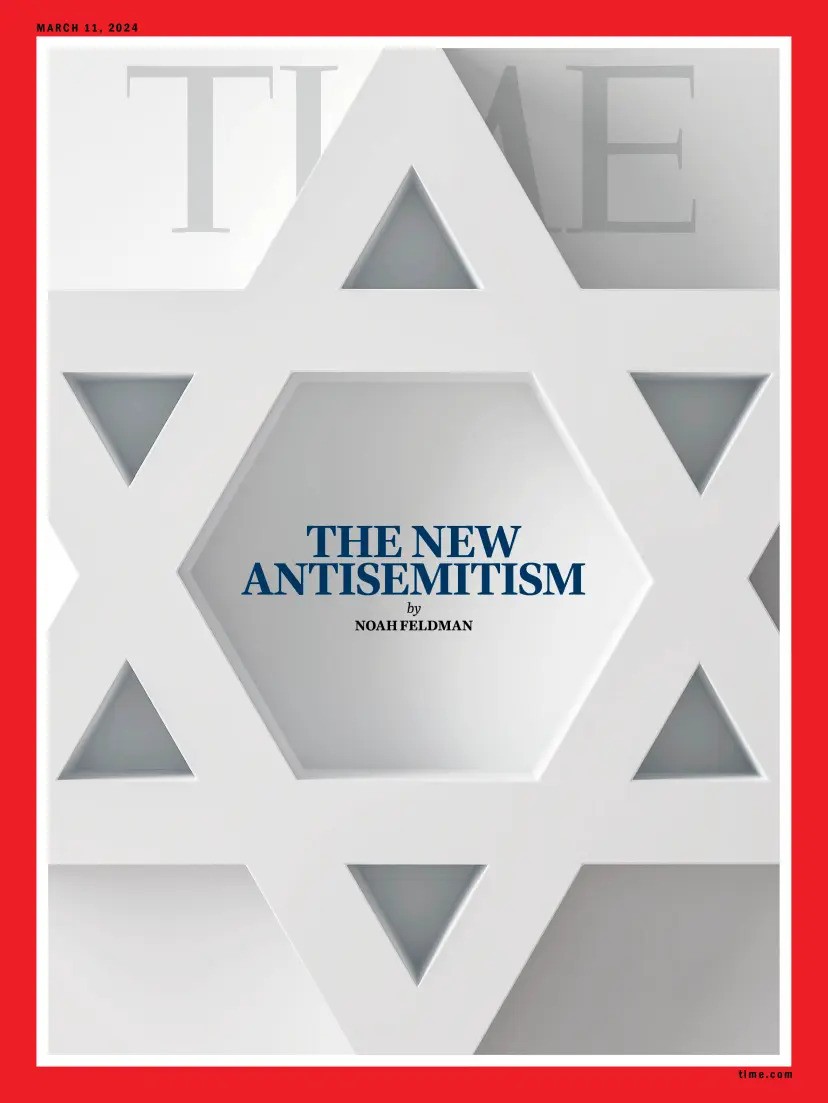
- Global antisemitism, while ever-present, has been energized by the Hamas massacre of 7th October 2023.
- Anti-Zionist antisemitism* found expression in public demonstrations, mainstream and social media, in politics, academia, NGOs and elsewhere.
- The resurgence of antisemitism has reinforced the existential necessity of Zionism and Israel.
Historical Context
Antisemitism – hatred of Jews – has blighted humanity for millennia. The European continent has usually been regarded as the most antisemitic region in the world but the Middle East currently occupies that unenviable position according to the Anti-Defamation League. The late Rabbi (Lord) Jonathan Sacks gave an overview of the phenomenon: in the Middle Ages, Jews were hated for their religion; in the 19th and 20th centuries for their race; today, for their nation state.
What happened after 7th October 2023?
Immediately following the brutal mass terrorist attack on Israelis (and other nationals) in southern Israel on 7th October 2023, demonstrators took to the streets of cities around the world chanting anti-Israeli and antisemitic slogans. Many of these events occurred before Israel launched its retaliatory operation against Hamas and its allies in Gaza and elsewhere.
Over the succeeding months, Jewish communities everywhere have been subjected to disparagement, intimidation, soaring hate speech on social media and, on occasions, physical assaults. In addition, heavily-biased media, NGO and political commentary – some of which appears to represent a form of ‘soft’ or covert antisemitism – has engendered an atmosphere that has undermined the sense of personal and communal security that Jews in many countries had taken for granted for decades.
While some commentators have sought to interpret the global reaction to the conflict as mere criticism of Israel, a surge in antisemitism has been confirmed statistically by NGOs such as the UK Community Security Trust (CST). They reported that 2023 was the year with the highest ever number of antisemitic incidents in the UK in any calendar year since monitoring began over a decade ago. Of the 4,103 incidents, 66% occurred after the 7th October attack, the highest weekly number of incidents was recorded in the days immediately following the massacre, peaking on 11th October, indicating that it was the Hamas terror attack, rather than Israel’s military response in Gaza, that sparked most of the antisemitism in the UK.
Conclusions and Implications
The atrocities committed by Hamas in October 2023 generated a brief outpouring of sympathy for the Israeli victims but this was soon overtaken by a huge upsurge in global antisemitism, as confirmed by data sources, including the UK’s CST. In numerous countries, large rallies opposing Israel and, in many cases, portraying Hamas’s actions as ‘resistance’, have been accompanied by the chanting of Jihadist slogans such as ‘From the river to the sea/Palestine shall be free’ and ‘there is only one solution/intifada revolution.’ These are direct references to the anti-Zionist and genocidal rhetoric of Hamas and related terrorist groups calling for the destruction of the State of Israel and the murder of its inhabitants.
More measured though nevertheless highly critical comments on Israel were expressed by mainstream journalists, politicians, UN officials, academic leaders and others, thus generating an atmosphere of hostility to the world’s only Jewish state and, by extension, the large majority of Jews for whom Israel forms a core part of their identity and who have close personal connections to the country. Beyond such overt verbal and physical expressions of antisemitism, antisemitic sentiment seems to have motivated the silence of many following the 7th October terrorist attack and the ongoing captivity of Israeli hostages in Gaza. This has been particularly noted in relation to UN Women and other global women’s organisations that have either not reacted or have been very slow to condemn the horrendous sexual attacks carried out by the terrorists.
Among the lessons to be learned from these events are the following:
- Antisemitism remains a potent global force that has been energised by the Hamas massacre of 7th October. Hatred of Jews and the Jewish state may be overt or subtle, with anti-Zionism or harsh criticism of Israel serving as camouflage for anti-Semites.
- The widespread expression of antisemitic tropes by pro-Palestinian demonstrators, social media influencers and activists since the massacre, and the war it triggered, suggest that ignorance and/or prejudice may be a strong motivating factor for many people.
- Continuing efforts to educate the public, especially young people, about the nature and dangers of antisemitism, and its relationship to anti-Zionism and anti-Israelism, are necessary. The International Holocaust Remembrance Alliance definition offers a useful tool in this regard.
- The bottom line for most Jews, both in the diaspora and Israel, is the continuing existential necessity of Zionism and Israel despite the renewed concerted effort to delegitimise and disempower the Jewish state by those with an antisemitic agenda.
Go to i-gnite.org/antisemitism to read more.
Previous Issues:
The Northern Front - Who are Hezbollah and its Regional Allies? (Updated Nov 2024)
Key Points
- Since October 8th 2023, Hezbollah has launched about 10,000 rockets, drones and missiles into Israel, causing dozens of deaths of soldiers and civilians, the evacuation of more than 60,000 Israelis from their homes, damage to communities, as well as bush fires.
- Escalation since September 2024 includes an IDF ground invasion alongside airstrikes in Lebanon, which aim to eliminate Hezbollah’s capabilities and to enable the return of Israelis to their homes.
- A ceasefire deal between Israel and Lebanon has come into effect on 27 November 2024, although serious concerns remain about Hezbollah’s cooperation.
The Lebanese Border
Who are Hezbollah?
Over the past 30 years, Hezbollah (‘the Party of God’), a Shia paramilitary organisation, proscribed by the UK and other states as a terrorist group, has become increasingly entrenched in Lebanon, a country suffering from decades of sectarian and political instability. In recent years, Hezbollah has become its leading political faction. As a radical Shia paramilitary organisation, it is closely allied to – and largely dependent on – Iran. Its ideology is anti-American and, especially, anti-Israeli and antisemitic. It shares with Iran and its other proxies in the so-called Axis of Resistance (including Hamas, Islamic Jihad and the Houthis) the aim of destroying the state of Israel. It has a long history of international terrorism including the 1994 bombing of a Jewish community centre in Argentina that killed 85 people and injured hundreds.
Hezbollah took credit for the unilateral withdrawal of the IDF from southern Lebanon in 2000 but provoked a war with Israel in 2006 in which it suffered heavy losses. Following that war, the UN Security Council passed resolution 1701 calling on all armed forces to withdraw from the area south of the Litani river, a demand that Hezbollah has ignored. Until the current war with Israel, Hezbollah’s military capabilities had been restored to the point where its battle-hardened manpower was believed to be between 50,000 and 100,000 fighters who control a sophisticated armoury including over 150,000 precision guided missiles aimed at all of Israel’s main population centres.
What did Hezbollah do after 7th October 2023?
On 8th October, Hezbollah launched its first attacks on Israeli border communities ‘in solidarity’ with Hamas, presumably in an attempt to distract IDF attention from Gaza. Until summer 2024, Hezbollah had fired about 2,500 rockets into Israel, killing dozens of Israeli soldiers and civilians, and causing the evacuation of about 60,000 Israelis from their homes, along with severe damage to kibbutzim and towns (including Kiryat Shemona), as well as vast bush fires.
Escalation since Summer 2024
In July 2024 a Hezbollah fired rocket killed 12 children and injured 34 more on a football pitch in the Druze town of Majdal Shams in the Golan Heights. In the following months, the fighting on both sides has escalated:
Ceasefire deal with Lebanon November 2024
After two months of ceasefire talks, on 26 November 2024 Israel and the Lebanese government (although not Hezbollah) signed a ceasefire deal promoted by the US and is effective from 27 November. The deal stipulates that both sides stop the fighting, Hezbollah retreat north of the Litani River and the Lebanese army gradually deploy in South Lebanon while the IDF retreats from these areas. Internationally monitored, the US has also given Israel a guarantee that it may act in Lebanon in case of a breach in the ceasefire conditions. After an interim phase of 60 days, the deal will become permanent and act as the basis for negotiating the land border between the two countries. There remains serious concern about the Lebanese political and military capability of guaranteeing Hezbollah’s cooperation, conditioned mainly by Iran.
The Iran Front
The current position remains dangerous and unstable.
Previous Issues:
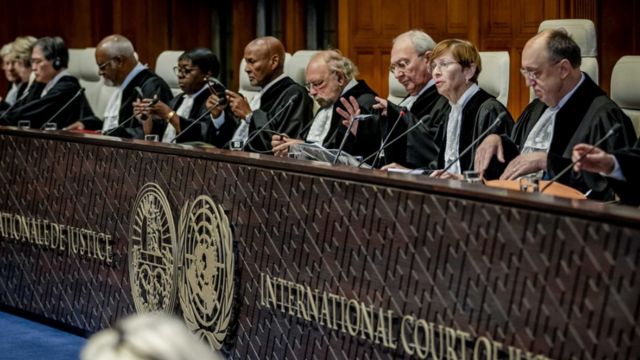
South Africa's case against Israel in the international court of justice, The Hague
Key Points
- South Africa has brought a case to the IJC that Israel is committing Genocide.
- Israel absolutely refutes the claims and calls the case ‘baseless’.
- Germany, the UK and the US have been vocal in defending Israel against the claims.
What is the UN Genocide Convention?
According to the UN 1948 Genocide Convention: “To constitute genocide, there must be a proven intent on the part of perpetrators to physically destroy a national, ethnical, racial or religious group. Cultural destruction does not suffice, nor does an intention to simply disperse a group”.
What is Israel Accused of?
On 29th December 2023, South Africa filed a case against Israel in the International Court of Justice (ICJ) in The Hague, accusing Israel of genocide in Gaza.
What are South Africa’s Main Claims?
At the first ICJ hearing on the 11th January, South Africa argued that Israel’s military operation in Gaza is evidence of both intent and actual genocidal practices. Evidence claimed by South Africa included:
What are Israel’s counter-claims?
On the 12th January, Israel’s legal team responded and argued that:
Further Counter-claims Formulated by Legal Commentators:
What Might the Outcome of the ICJ Decision Be?
Global Reactions:
Previous Issues:
What do we know about Gaza?
Key Points
- The current borders of Gaza were drawn following the 1948 and 1967 Arab-Israeli wars.
- Gaza, like the West bank, was under Israeli rule from 1967 to 1993.
- The Oslo Accords, signed between Israel and the PLO in 1993-1995, established the Palestinian Authority, under whose rule 90% of Palestinians in the West Bank and Gaza lived.
- In 2005, Israel unilaterally withdrew from Gaza.
- The Islamist terrorist group Hamas, seized control of Gaza in 2007. Hamas’s declared aim is to destroy Israel and it has militarised the Gaza Strip and turned it into a huge human shield.
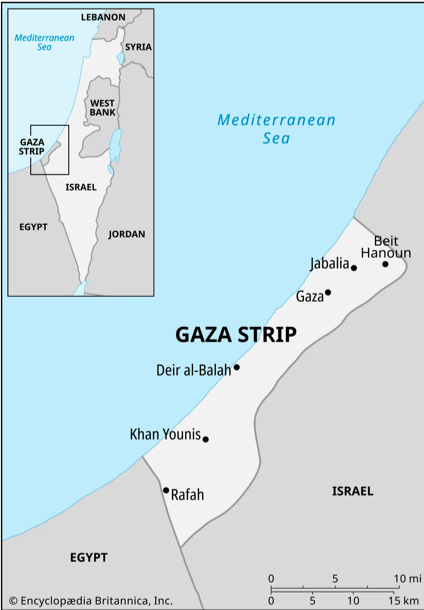
The Gaza Strip is a small coastal area (41km long and 10 km wide) between the Mediterranean Sea, the Israel to the north and east and Egypt to the south. More than two million Palestinians live there in densely populated towns and refugee camps.
Today’s borders of Gaza were drawn after the 1948 and 1967 Arab-Israeli wars. In 1947, the Arab population in the British Mandate for Palestine rejected the UN Partition Plan, which allotted (today’s) West Bank and an enlarged area of Gaza to a proposed Arab state, alongside a Jewish state in the rest of the region west of the Jordan River.
After Israel’s 1948 Declaration of Independence, local Arab militias and five neighbouring Arab states attacked Israel. The 1949 armistice agreement redrew the boundaries and reduced the size of Gaza, which remained under Egyptian occupation until 1967. (The West Bank was conquered by Jordan in 1948 Jordan and annexed it shortly thereafter).
In the 1967 Arab-Israeli War, Israel occupied enemy territories, including Gaza. After the war, Israel accepted UN Security Council Resolution 242, which called for the return of some (not all) territories occupied by Israel in return for ‘secure and recognized borders’ in the context of peace negotiations. The Arab League issued its ‘Three No's’ – no peace, no recognition (of Israel), no negotiation.
Gaza and the West Bank remained under Israeli rule between 1967-1993. Israel accepted its de-facto humanitarian obligations under international laws of occupation and rejected the de jure status of these territories as ‘occupied’ since the UN had never recognized prior Jordanian or Egyptian sovereignty there.
The Oslo Accords, signed between Israel and the PLO in 1993-1995, established the Palestinian Authority and divided Gaza and the West Bank into three categories (A, B, C) based on the degree of military and civilian rule. Since 1996, 90% of the Palestinian population in these areas have lived under PA rule which covers all aspects of government other than external security. The Oslo Accords, which have the full force of international law, were meant as a temporary measure prior to a final status agreement. But the peace process was undermined by the murder of prime minister Yitzhak Rabin in 1995, the second Palestinian ’Intifada’ (2000-2005), and the continued refusal of Palestinian leaders to recognize Israel as the sovereign state of the Jewish people.
In 2005, Israel withdrew from Gaza (incl. evacuation of all settlements and military bases). Since 2006, Gazans have been subjected to the authoritarian regimes of first the PA and then the Islamist group Hamas founded in 1987, overtly committed to the destruction of Israel.
Since 2007, Israel and Egypt have tightened their respective borders with Gaza. UN Secretary-General Inquiry Report from 2011 recognized that “Israel faces a real threat to its security from militant groups in Gaza” and the blockade of Gaza was therefore deemed legal under international law. The naval blockade was “imposed as a legitimate measure in order to prevent weapons entering Gaza by sea” and was deemed neither as collective punishment against civilians nor as disproportionate. At the same time, Israel maintained significant traffic between Israel and Gaza: Kerem Shalom crossing for goods (food, medical equipment, fuel, building materials, agricultural inputs, textile products and more), Erez crossing for people (Gazans for medical treatment, foreign officials, journalists, and Palestinians from Israel and the West Bank). The traffic continued during closures due to Hamas rocket attacks.
The militarisation of Gaza since Hamas seized power has taken the form of the immense tunnel network under Gaza’s densely crowded urban areas. Command posts, rocket launch pads, communication networks, weapons dumps, siege storage units and cells for keeping prisoners and hostages were excavated by using shafts that lead from the basements of thousands of residential and public buildings (schools, hospitals and mosques). Hamas has turned entire cities where over 2 million people live into one big human shield. This makes for the high civilian casualty toll arising from Israel’s attempts to defend itself from the repeated attacks launched by Hamas and other terrorist groups.
Since 2008, Israel and Hamas have fought several armed conflicts, culminating in the current war that started with the 7th October 2023 rocket barrages, massacres and hostage-taking carried out by Hamas.
Tough Questions About Gaza Answered
Previous Issues:
The Case of those taken hostage on October 7th

Key Points
- On October 7th, Hamas and Islamic Jihad took at least 240 people hostage to Gaza, including many children and women.
- By 30th November, 107 hostages were released in a hostage-for-prisoner swap deal. 129 hostages are still being held in Gaza.
- The act of hostage-taking is prohibited under international humanitarian law and has been condemned internationally.
On October 7th 2023, Hamas and Islamic Jihad not only murdered about 1200 Israelis, the terrorist organisations also took at least 240 people hostage and brought them to Gaza. The hostages include Israeli and foreign civilians, among them many children, women and elderly, as well as Israeli soldiers.
On October 7th 2023, Hamas and Islamic Jihad not only murdered about 1200 Israelis, the terrorist organisations also took at least 240 people hostage and brought them to Gaza. The hostages include Israeli and foreign civilians, among them many children, women and elderly, as well as Israeli soldiers.
The act of hostage-taking is prohibited under international humanitarian law. According to the International Red Cross, “carrying out, or threatening to carry out, an act of hostage-taking is prohibited under international humanitarian law and constitutes a grave breach in international armed conflicts and a war crime in non-international armed conflicts.”
To date we know that several hostages were murdered in Gaza, including two Israeli women and one Israeli female soldier
After a month and a half of fighting, Israel and Hamas, with the mediation of Qatar, struck a deal on 22nd November, which includes a temporary cease-fire and the release of 50 hostages in groups of 12-13 over four days (with the possibility of a limited extension of the deal), first of all releasing women and children. In return, Israel promised to release 150 Palestinian female and teenage prisoners and administrative detainees (detained by Israel as a preventive measure and awaiting trial for security breaches) kept in Israeli prisons. The deal also includes the transfer of humanitarian goods and fuel to Gaza.
As of 30th November, 107 hostages - Israeli women and children as well as foreign nationals (and several dual nationals) - have been released and returned to Israel or their home countries. The deal suggested that captive family members (mothers and children, not fathers) will be largely kept together. In return Israel has freed security prisoners and detainees.
According to independent journalist Tom Gross, at least 55 percent of the 117 prisoners released during the first three days of the hostage-for-prisoner swap had been convicted of violent crimes, including 10 for attempted murder, 13 for inflicting serious bodily harm, 19 for placing a bomb or throwing an incendiary device, seven for shooting at people, and five for assault.
The Jerusalem Post cited a report on a hostage that was kept captive for 50 days by an UNRWA teacher. Two hostages were taken to Shifa hospital as shown on its cameras on 7th October. Returning hostages talk about solitary and group confinement, lacking food and medical care, as well as abusive behaviour towards children, forcing them to watch videos of the atrocities or be silent during their 50-day captivity.
The IDF knows of another 129 hostages that are still kept in Gaza, according to constantly updated information.
The ICRC has been fiercely criticised in Israel for not insisting on visiting the hostages in Gaza in order to check their health and provide necessary medical care. Some hostages require regular medicine and others were badly injured in the attacks and there remains substantial fear as to their medical state. The ICRC has continually argued that they have been calling for the immediate release of the hostages and requested access to them, but that the organisation is ultimately “not the ones making the decision and creating the conditions for access to materialize”. The ICRC has, however, been appointed as the facilitator in the release of hostages in Gaza and of prisoners and detainees in Israel, respectively.
Many domestic and international campaigns have been calling for the immediate relief of the hostages, these include Hostages and Missing Families Forum, or Kidnapped from Israel Campaign.
Previous Issues:
The Case of the Shifa Hospital in Gaza City
Key Points
- Between 1967-1995 Israel developed Shifa Hospital into Gaza’s main medical centre.
- Since Israel’s evacuation of the Gaza Strip in 2005, Hamas has transformed the Israeli-built underground infrastructure of the hospital into one of its main military headquarters.
- Since entering the hospital on 14-15.11, IDF has found evidence of Hamas military activity and hostage keeping there. IDF continues to take active steps to minimise a humanitarian crisis there.
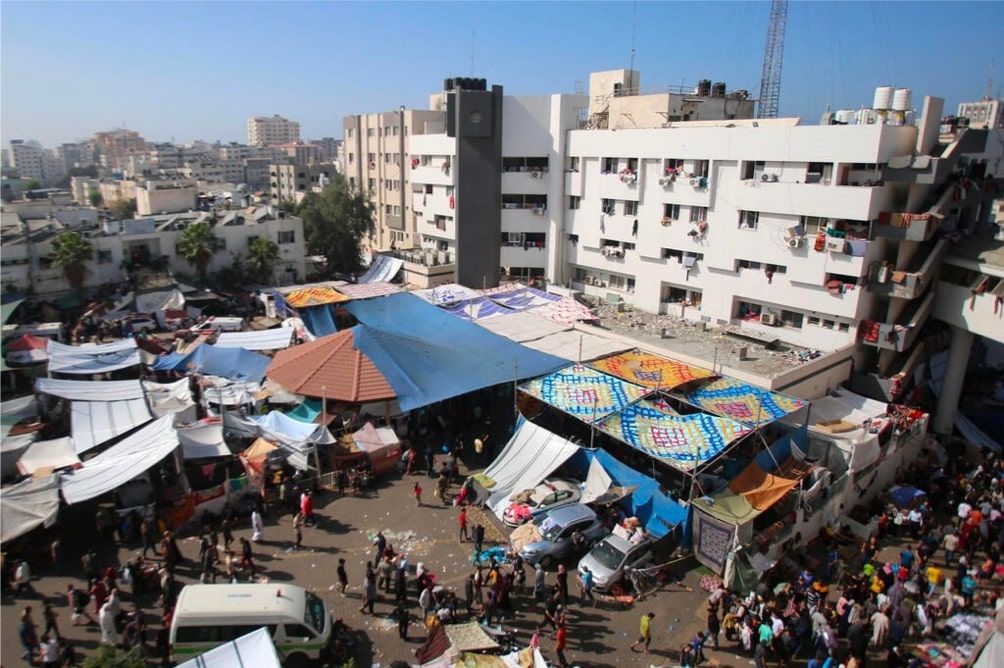
Shifa Hospital is situated in Gaza city and is the largest of about twenty hospitals in the Gaza Strip
Built during the British Mandate, it treated Egyptian soldiers in the 1967 War, and was thereafter taken over by the Israeli Military Administration which continually enlarged and developed its sophisticated medical infrastructure. In the 1980s in particular Israeli architects and public contractors and expanded its buildings and developed its underground basement.
Since the 2005 Israeli evacuation of the Gaza Strip, Hamas has transformed the hospital underground floor into one of its key military headquarters. IDF intelligence confirmed that the basements and underground areas include shelters of senior Hamas leaders, pier openings to the highly sophisticated offensive tunnels network, coordination headquarters for the launching of rockets on Israel, and other terrorist infrastructures. The Israel Security Agency (Shabak) and Washington Post similarly warned of these developments in 2009 and 2014 respectively.
Reuters reported last week that thousands of Palestinian evacuees have been filling the hospital’s corridors, waiting rooms and parking lot, and have turned it into one of the largest refugee camps in the Gaza strip.
Israeli sources have expressed fears that Hamas may be holding hostages under the hospital
On 6.11 the IDF denied claims by the Gazan Ministry of Health (controlled by Hamas) that it had bombed Shifa hospital. In the following days, the IDF completed the encirclement of Gaza City (using phosphorescent lighting flares in the vicinity of the hospital) and has been preparing to enter the hospital. American officials on CBS News have expressed worry about battles in the hospital premises
More than 240 Israeli civilian hostages are still held captive in the Gaza Strip. Since the beginning of the war 333 Israeli soldiers have been killed (correct as of noon on 2nd November), 23 in northern Gaza alone.
On 11.11 the Gaza Ministry of Health claimed that the hospital is no longer functioning and has run out of electricity and water.
Recognising the humanitarian predicament in Shifa, Israel has taken steps to protect the hospital’s patients and medical staff.
• according to Reuters and Ynet, Israel requested the creation of alternative hospitals in Gaza (ships from Italy, France and Greece as floating hospitals along the coast, field hospitals to be set up by Egypt, European countries and the UN);
• UNRWA-WHO emergency medical supplies continue to reach the hospital;
• On 12.11.23 IDF announced the opening of humanitarian corridors to allow patients to be transferred from Shifa, Rantisi and Nasser hospitals;
• IDF provided Shifa with fuel for urgent medical purposes. Hamas has reportedly prevented the hospital from receiving this fuel.
American officials have expressed their worry over possible battles within the hospital premises, which would endanger patients and lead to further regional escalation.
Previous Issues:
The Case of Jabalya, What Happened on the 31st october?
Key Points
- The target of the attack was a Hamas military compound in Jabalya.
- A Hamas leader and personnel were based in the tunnels underneath.
- 23 Israeli soldiers were also killed in the attack.
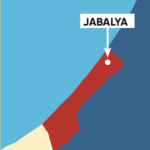
Jabalya is an area in the northern Gaza Strip where the town of Jabalya and Jabalya refugee camp are located.
On 31.10 the IDF targeted a Hamas military compound in Jabalya (a high-story building and a linked network of offensive underground tunnels) where Hamas personnel, weapons and combat infrastructure were located. Also senior Ibrahim Bihari, responsible for past terrorist attacks on Israelis and the large-scale massacre of Israeli civilians on 7th October 2023. The IDF thus deemed the building and associated tunnels a legitimate military target under the laws of armed conflict.
Many media platforms, including the BBC, reported that dozens of Palestinians had been killed and 100’s wounded by the Israeli attack. This was based on a statement from the Hamas-run Gaza health ministry and the hospital in Beit-Lahiya that hundreds of / 52 Palestinians had been killed, with no breakdown.
So far we know that the Israeli air force launched a series of precision strikes on the Hamas military targets in Jabalya, killing about 50 Hamas terrorists, including senior commander Bihari, and destroying much of the offensive tunnel infrastructure. IDF ground forces also entered Jabalya to support these efforts.
Jabalya witnesses reported that secondary damage to residential buildings above the tunnels caused casualties among civilians who had not followed – or had been prevented by Hamas from following – repeated IDF instructions (in Arabic) to evacuate the area.
Ynet and Times of Israel reported on 2.11 that IDF soldiers witnessed Hamas sending out around 100 women and children as human shields to protect the Hamas military compound. Protocol I of the Geneva Conventions forbids use of human shields. The use of human shields is also a specific intent war crime as codified in the Rome Statute, which was adopted in 1998.
More than 240 Israeli civilian hostages are still held captive in the Gaza Strip. Since the beginning of the war 333 Israeli soldiers have been killed (correct as of noon on 2nd November), 23 in northern Gaza alone.