
The UN:
What are the reasons for the longstanding tension between Israel and the UN?
The UN has always had an uneasy relationship with Israel and Israel has always been treated differently from other UN Nations.
The UN General Assembly regularly passes more resolutions condemning Israel than those condemning all other countries combined, including Syria, North Korea, South Sudan and Iran. The UN Human Rights Council has a permanent agenda item requiring discussion of Israel and no other named country.
UNRWA, created in 1949 to care for Palestinians displaced by the Arab-Israeli war of 1948, is the only agency under the UN committed to supporting one group of refugees.
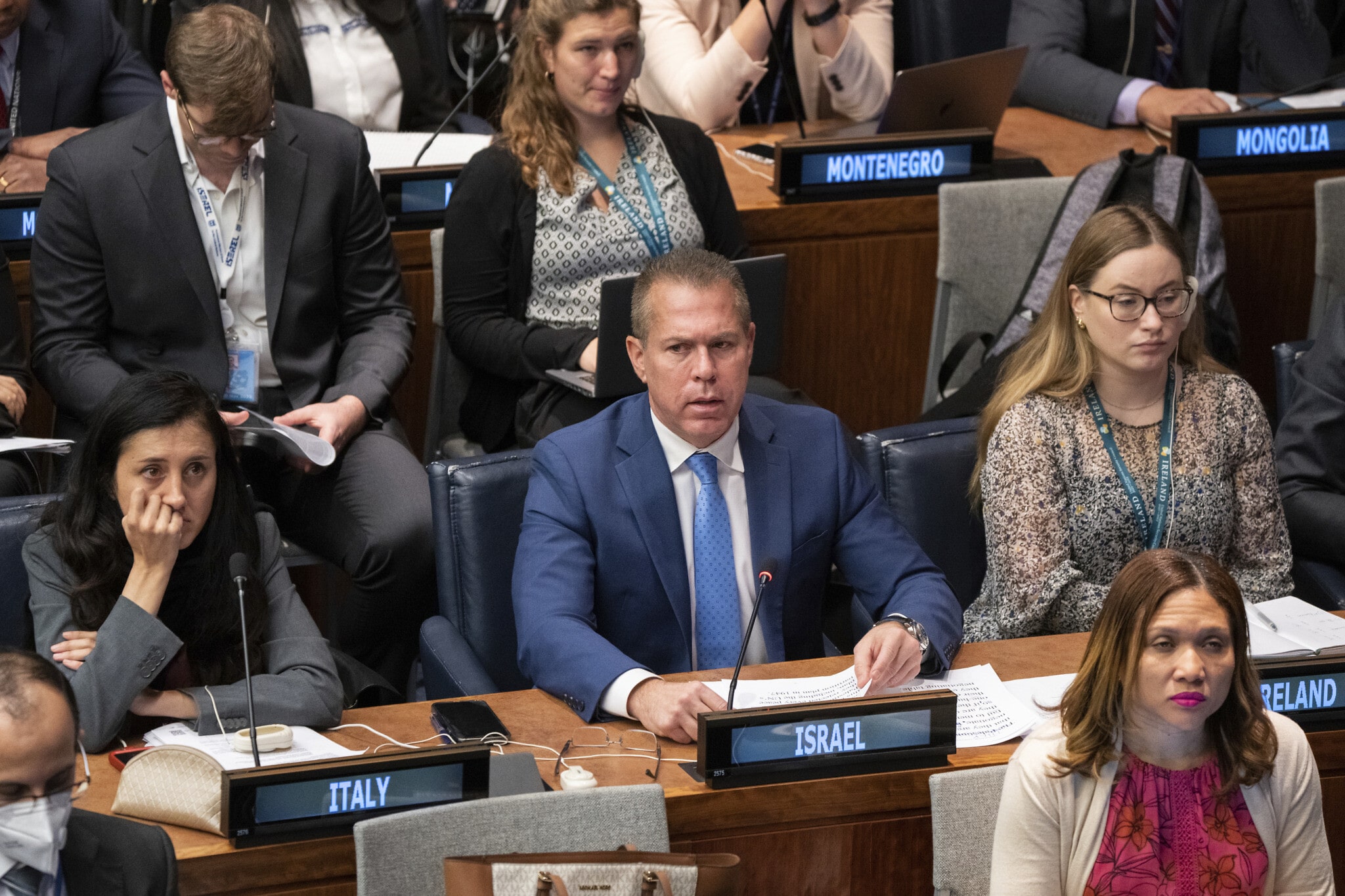
Though every other refugee in the world falls under the jurisdiction of the UN High Commissioner for Refugees (UNHCR), Palestinians have their own agency.
The UN established no special agency for the larger numbers of Jewish refugees from Arab and Muslim countries.
UNRWA expanded the definition of Palestinian refugees to include all descendants of the original male refugees. meaning 5.9 million people today are claiming refugee status.
On Nov 10, 1975, the UN General Assembly passed Resolution 3379, determining that Zionism is “a form of racism and racial discrimination.” This was eventually revoked in 1991 though many of its associated committees and activities remained.
The UNHRC also appointed a rapporteur devoted exclusively to investigating potential Israeli crimes. It is the only UNHRC special rapporteur with an open-ended mandate with no fixed duration.
While UN Secretary-General Antonio Guterres said “Nothing can justify” the Hamas attacks of October 7, at the same time he said they “did not happen in a vacuum.”[1] UN Human Rights Council (UNHRC) Special Rapporteur on Palestine, Francesca Albanese wrote, “Today’s violence must be put in context,” blaming it on “Almost six decades of hostile military rule over an entire civilian population”.
The UN doesn’t recognize Hamas as a terrorist organisation. Nor does it recognize Hezbollah either. That means UN resources can be and regularly are provided to members of those terrorist groups.
The UN General Assembly (UNGA) passed a number of resolutions on October 27 calling for a ceasefire without condemning Hamas for initiating or continuing the war.
Learn More:
UN Watch
UN Watch
Unpacked Education
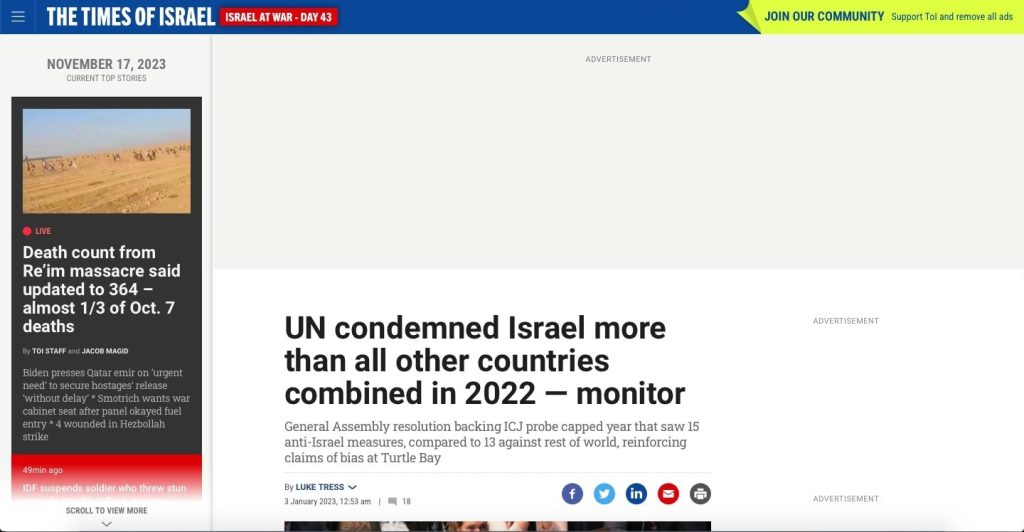
TimesOfIsrael
UN condemned Israel more than all other countries combined in 2022 — monitor.
Chaim Herzog
JCPA
The UN and Israel
UN Watch
AIJAC
Michal Cotler-Wunsh speech on antisemitism.